8 Signs Your Kansas City Home Needs Foundation Repair in 2026
Kansas City homes face a unique set of foundation challenges, and spotting the warning signs early can save homeowners significant time and money. The Kansas City, MO, area sits on some of the most demanding soil in the Midwest, making it especially important to watch for structural red flags before they become serious problems. Foundation repair in Kansas City, MO, is one of the most common home services in the metro for good reason.
Why Kansas City Homes Are Especially Vulnerable
Kansas City foundations face more stress than those in most other Midwest cities. The region sits on Wymore-Ladoga clay, a soil type with a very high shrink-swell rating that expands dramatically when wet and contracts during summer droughts. That constant movement pushes and pulls on your foundation every season.
Missouri's frost depth also reaches 36 inches, meaning frozen ground can heave your foundation from below each winter. Water that enters existing cracks freezes, expands by roughly 9 percent, and widens those cracks further. After enough cycles, small problems become serious structural damage. Homes in Brookside, Waldo, and the Northland are especially prone to this cumulative stress.
8 Warning Signs That Warrant a Foundation Repair Inspection
1. Cracks in Basement Walls or Foundation
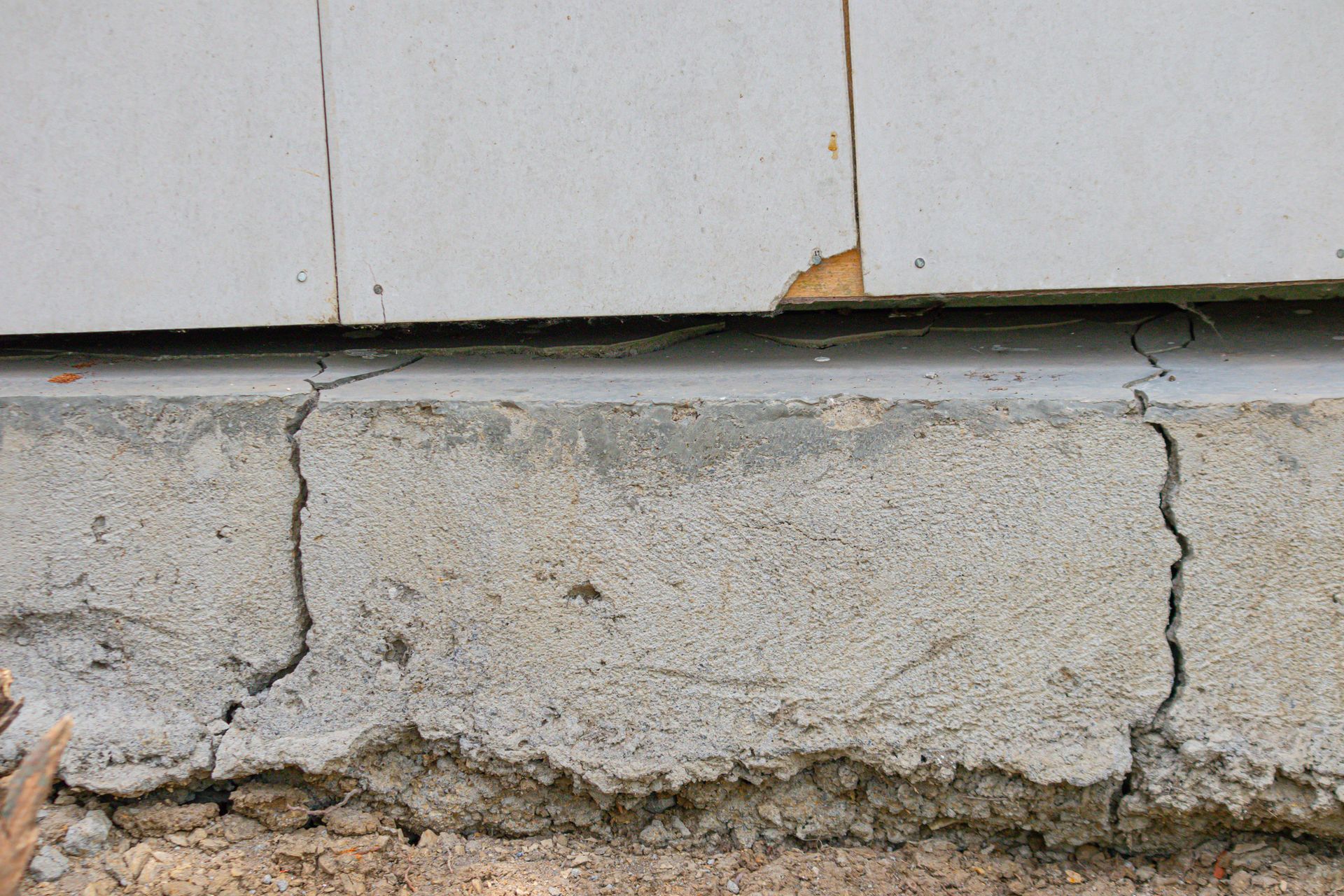
Horizontal cracks along the mid-height of block basement walls are a particularly serious sign. They often indicate lateral clay pressure pushing inward. Vertical or stair-step cracks can signal differential settlement. Any new or widening crack after a wet spring or hard freeze deserves a professional look.
2. Doors and Windows That Stick or Won't Close
When doors or windows suddenly stick or no longer sit square in their frames, the frame of your home may be shifting. As soil beneath your slab or footings moves, door openings can rack out of alignment. This is one of the most common early signs homeowners notice after Kansas City's wet spring season.
3. Uneven or Sloping Floors
Floors that feel bouncy, sloped, or uneven often point to settling or voids forming beneath the slab. Kansas City's clay soil shrinks during summer droughts, pulling support away from footings. If a ball placed on your floor rolls toward one side of a room, that slope is worth a professional assessment.
4. Gaps Between Walls and the Ceiling or Floor
Separation between walls and adjacent surfaces often means different sections of your home are moving at different rates. South-facing and west-facing sides of KC homes tend to dry out faster in summer, creating uneven movement across the foundation footprint.
5. Bowing or Leaning Basement Walls
Bowing walls are a serious warning sign. Expanding clay outside the wall generates lateral pressure, and if unrelieved, the wall can bow inward over time, compromising structural integrity. If you see a visible curve or feel a wall leaning inward, act quickly.
6. Water Intrusion and Moisture in the Basement
Moisture on basement walls or a damp floor can signal more than a simple leak. Cracks in the foundation wall allow water entry during rain events, and KC receives over 40 inches of annual rainfall with peak intensity in May. Repeated intrusion erodes mortar joints, rusts reinforcing steel, and accelerates crack growth through freeze-thaw cycling.
7. Cracks in Interior Drywall, Especially Near Doors
Diagonal cracks running from the corners of door and window frames are a common sign of foundation movement. While drywall cracks can have other causes, a pattern of diagonal cracking at multiple openings warrants an inspection.
8. Chimney Separation or Visible Exterior Cracks
A chimney pulling away from the house, or stair-step cracks in exterior brick, can indicate foundation settlement. Exterior masonry shows movement clearly because mortar joints are rigid. Older Kansas City homes built before 1990 may be especially susceptible, as construction methods at the time often did not fully account for expansive clay movement.
How Quickly Can Foundation Problems Get Worse in Kansas City?
Foundation issues can accelerate faster in Kansas City than in many other markets because of expansive clay combined with freeze-thaw cycles. A hairline crack can widen noticeably after a single wet season followed by a hard winter. The earlier a problem is identified, the easier it generally is to address.
Are Some Kansas City Neighborhoods at Higher Risk Than Others?
Yes. Homes near the Missouri River in Platte County sit on soft alluvial clay with a higher water table. Older neighborhoods in Jackson County, including Independence and Raytown, also see frequent foundation stress due to aging foundations on expansive clay. That said, foundation stress can occur anywhere in the metro where Wymore-Ladoga clay is present.
Get a Professional Inspection Before Problems Escalate
If your home is showing one or more of the signs listed above, a professional inspection can help you understand the scope before the issue grows. You can learn more about specific foundation repair services available in the area, or contact the team directly to schedule a consultation.
AFR has been helping Kansas City, MO, homeowners diagnose and address foundation problems for over 20 years. Reach out at (816) 419-3981 to discuss what you're seeing in your home. You can also find AFR on Google to read reviews from local homeowners across the metro.